Desk setup guide

How to build a real workspace in the corner of a room

Most home office advice assumes you have a room. This is for the far more common situation: a desk against a wall, in a space that is also something else.

6 additions Small-space first Renter-friendly

Heads up: the product links on this page are affiliate links. If you buy through one, Ratrendyshop earns a small commission - at no extra cost to you. We only list things we would put on our own desk.

A small home office has a problem a large one does not: the workspace has to end. When the desk is in the bedroom or the corner of the living room, the difference between a workspace and clutter is whether it has an edge.

Every item below either creates vertical space where there is no horizontal space, or draws a line around the working area. Nothing here is decorative.

01

Build upward, because you cannot build outward

On a small desk, the laptop is the single biggest consumer of surface area. Raising it does not make the desk larger, but it makes the space underneath usable — which on a 100cm desk is a meaningful percentage of what you have.

The stand also fixes the posture problem that small desks make worse, because a cramped desk usually means sitting closer to the screen than you should.

Small-space principle: Every object that can be lifted should be lifted. Vertical space is the only space you are not competing for.
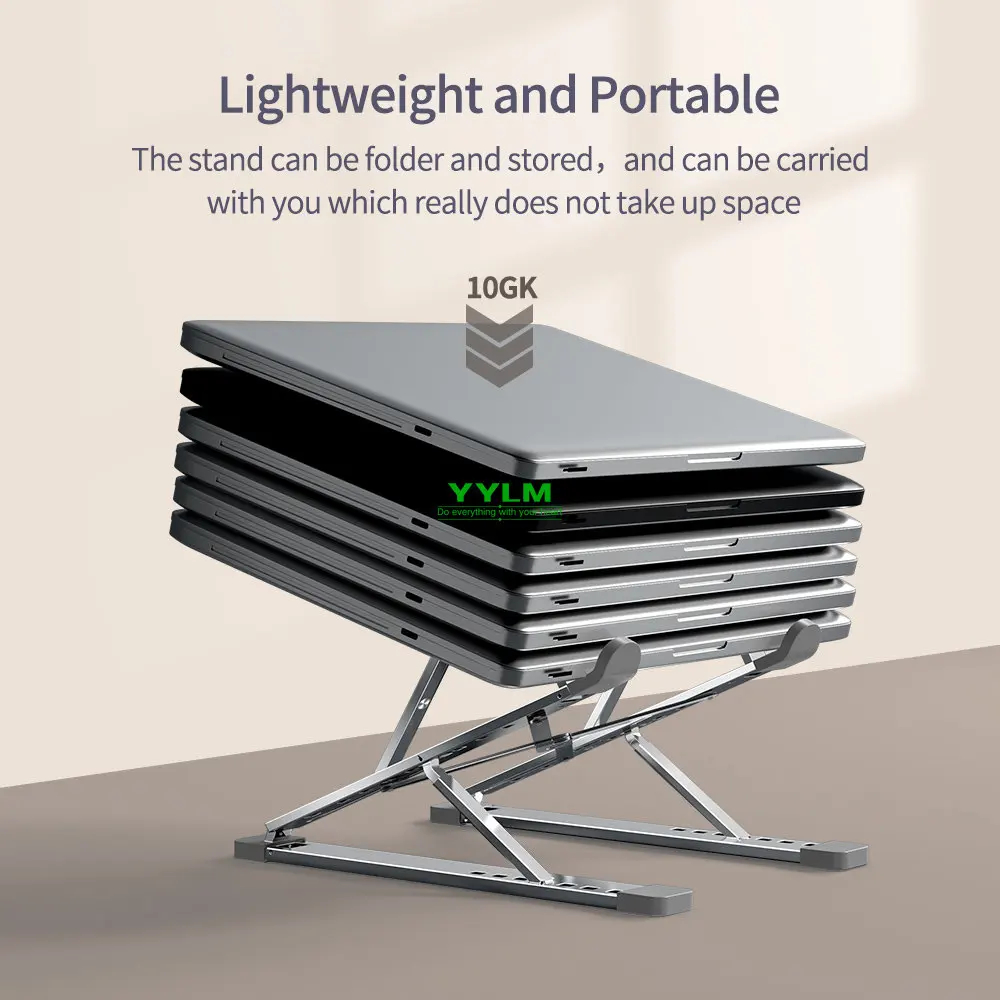
An aluminium laptop stand on a small desk with space underneath

Small desk? Build up, not out

Build upward, because you cannot build outward.

Check current price
02

Draw the line where the workspace ends

This matters more in a small room than a large one. When the desk shares a space with a bed or a sofa, there is nothing structural telling your eye — or your brain at the end of the day — where work stops.

A large mat does that. It is why a desk in a bedroom with a mat reads as an office corner, and the same desk without one reads as a surface things accumulate on.

The real reason this works: It is not about protecting the desk. It is about being able to look at the corner in the evening and see something finished.
A desk mat defining a small workspace against a wall

Make a bedroom corner feel like an office

Draw the line where the workspace ends.

Check current price
03

Collapse four cables into one connection

In a small space you are far more likely to move the laptop — to the kitchen table, to the sofa, out of the way when someone needs the room. Every cable you have to unplug is friction on a thing you do many times a day.

A hub turns that into one connection. Unplug once, leave, come back, plug in once.

Small-space specific: This matters much more here than in a dedicated office, because in a dedicated office the laptop never moves.
An 8-in-1 USB-C hub connecting several devices through one cable

Small desk fix: unplug once, not four times

Collapse four cables into one connection.

Check current price
04

Give the small stuff one address

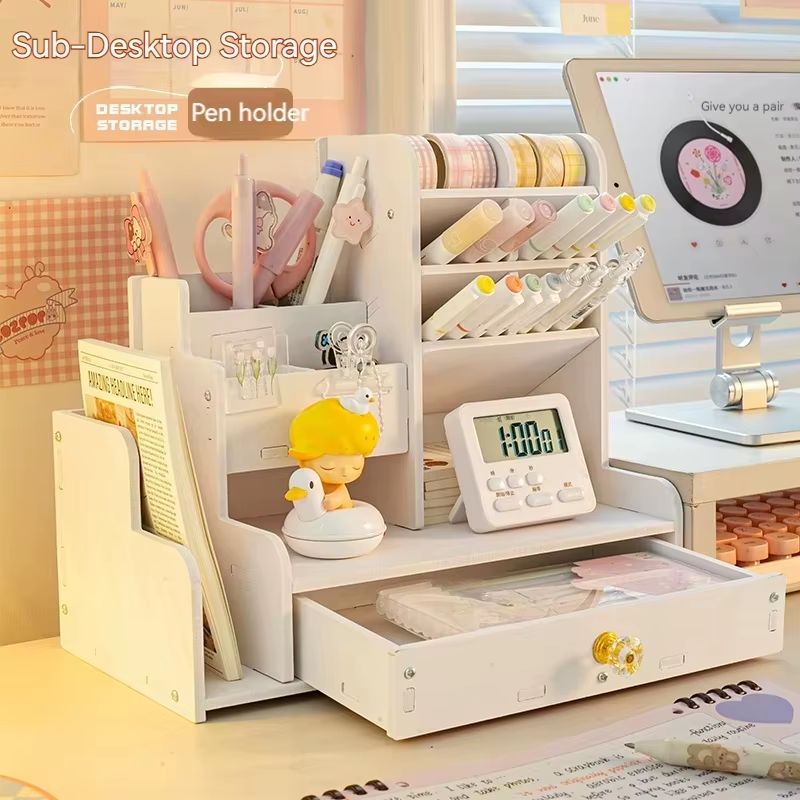
Small desks punish loose objects. On a large desk three pens and a pair of scissors look incidental; on a small one they look like the desk is losing.

One holder, everything that writes inside it. This is the cheapest item on the list and the one that changes how the corner looks fastest.

Rule of thumb: On a small desk, anything that exists in multiples needs a container. Not a drawer — a container you can see into.
A wooden pen and pencil holder on a compact desk

Give the small stuff one address

Small desk clutter: the cheapest fix.

Check current price
05

Fix the thing small desks do to your legs

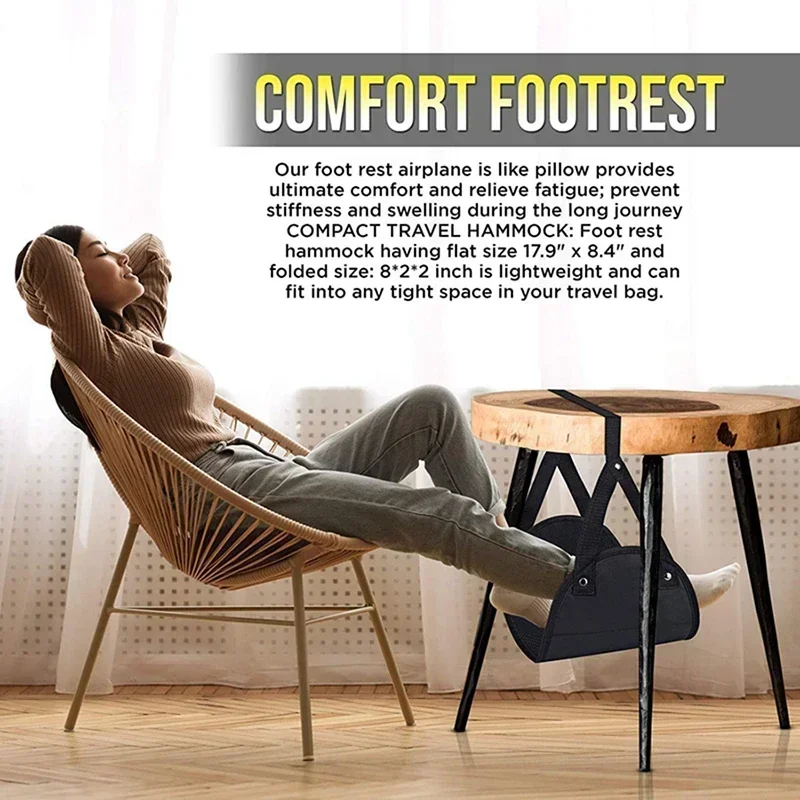
Desks in corners are often the wrong height, because they were bought as a table, or a dressing table, or they came with the flat. Too high is the common version, and the result is legs dangling with no support.

A hammock-style footrest hangs from the desk itself, needs no floor space, and packs away. In a room that is also something else, that matters.

Why last: It is the least visible fix here and the one you will notice most in hour three.
A hammock-style footrest hanging under a desk

Under-Desk Footrest Hammock

Hangs from the desk. No floor space used.

Check current price
06

Raise the screen and hide a drawer underneath it

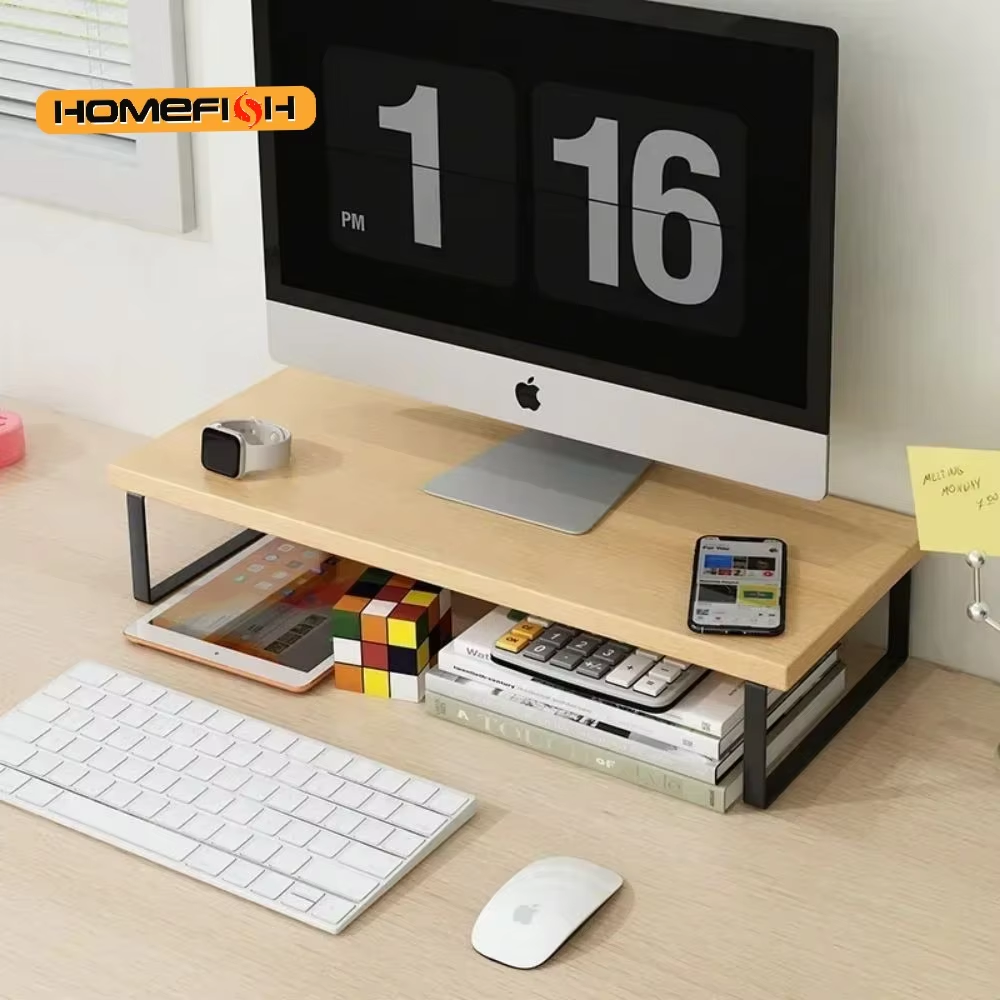
A monitor riser does something a laptop stand cannot: it lifts a full-size display to eye level while turning the gap underneath into storage you were already paying rent for. On a small desk, that strip of dead air is often the only free storage you have.

Slide a stack of notebooks, the keyboard, or a webcam into the space below instead of leaving them on the desk surface — the monitor ends up higher and the desk ends up with fewer objects on it, not more.

Small-space principle: A riser solves two problems in one footprint — screen height and storage — instead of buying a stand and a tray separately.
An elevated monitor riser with books and a camera stored underneath on a small desk

Elevated Monitor Storage Riser

Lifts the monitor to eye level and hides storage underneath.

Check current price

What not to buy for a small desk

  1. A second monitor. On a small desk it consumes the surface you just freed. Fix the laptop height first and see whether you still want one.
  2. A drawer unit. It moves clutter rather than reducing it, and it takes the leg space you do not have.
  3. Anything described as a 'desk organiser set'. Sets are sold by piece count. You need one container, not six.